
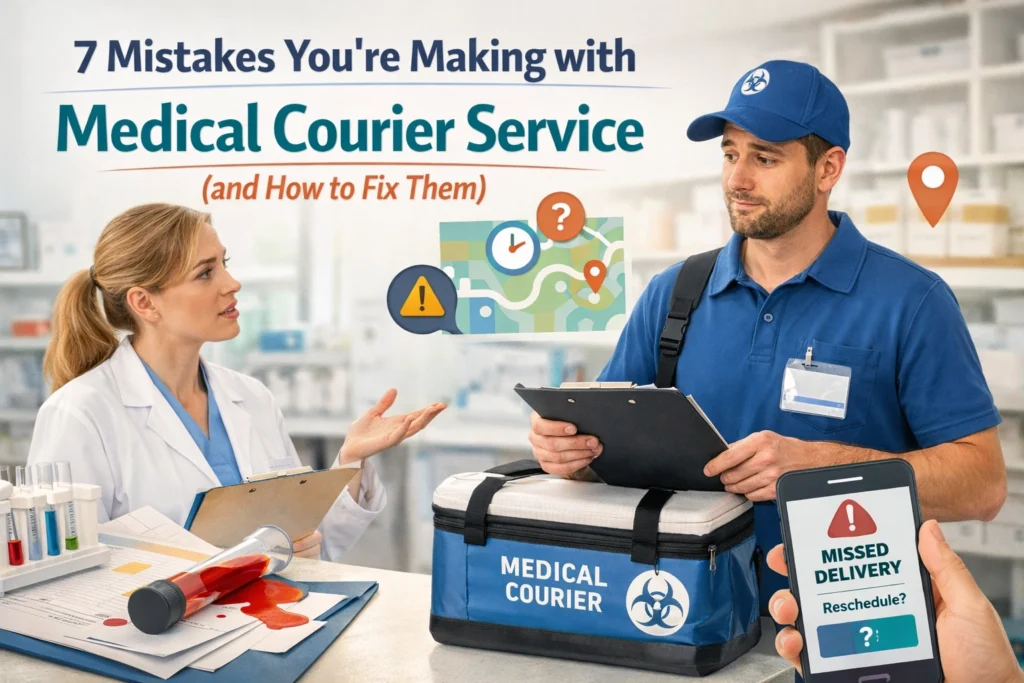
Look, we get it. When you're running a medical facility, clinic, or pharmacy, you've got a million things on your plate. The last thing you need is to worry about whether your medical courier service is actually doing its job right.
But here's the uncomfortable truth: a lot of healthcare organizations are making critical mistakes with their courier services, and these slip-ups can cost you big time in wasted resources, compliance headaches, and even patient safety.
Ready to find out if you're making these common errors? Let's dive in!
Mistake #1: Sending Specimens to the Wrong Address 📍
This is the big one. Delivering medical supplies, lab specimens, or pharmaceuticals to the wrong location isn't just embarrassing, it's potentially dangerous.
When a blood sample ends up at the wrong lab or critical medication gets delivered to the wrong clinic, you're looking at:
- Delayed patient diagnoses
- Wasted (and expensive) specimens
- Potential HIPAA violations if protected health information gets into the wrong hands
- Lost trust from patients and referring physicians
The Fix: Before every pickup, triple-check all delivery details with your lab courier service. That means verifying the exact address, recipient name, facility ID, and even the department or floor number. And here's a pro tip: work with a courier that requires electronic confirmation with photo verification. No more "oops, wrong place" excuses.
Mistake #2: Treating All Deliveries Like They're the Same ⏰
Not all medical deliveries are created equal. A routine supply drop-off? That can wait. STAT lab specimens for a patient in the ER? That's a whole different ballgame.

Scheduling everything as "ASAP" drives up your costs by about 20%. But missing a critical delivery window? That can literally impact someone's life.
The Fix: Be crystal clear about your actual timing needs. If you need it there by 9 AM for morning processing, say that, don't just request "same-day delivery" and hope for the best. The right medical courier service will offer multiple time-guaranteed options, from routine scheduled runs to true emergency STAT deliveries. Check out our laboratory services to see the difference time-specific delivery makes.
Mistake #3: Using Your Regular Shipping Company for Medical Items 🚫
This is like asking your general practitioner to perform brain surgery. Sure, they're both doctors, but…
Medical couriers aren't just delivery drivers. They're trained specialists who understand:
- Proper temperature control for specimens and medications
- Chain of custody requirements
- HIPAA compliance (yeah, it matters for transport too)
- Handling biohazardous materials safely
- The difference between a blood culture and a throat swab (and why it matters)
The Fix: Stop using that general courier service you found on Google. Partner with a dedicated medical courier service that lives and breathes healthcare logistics. At RCS Delivery, our drivers undergo specific training for medical transport: because your pharmacy delivery service shouldn't be handled by someone who was delivering pizzas yesterday.
Mistake #4: Flying Blind Without Tracking 🗺️
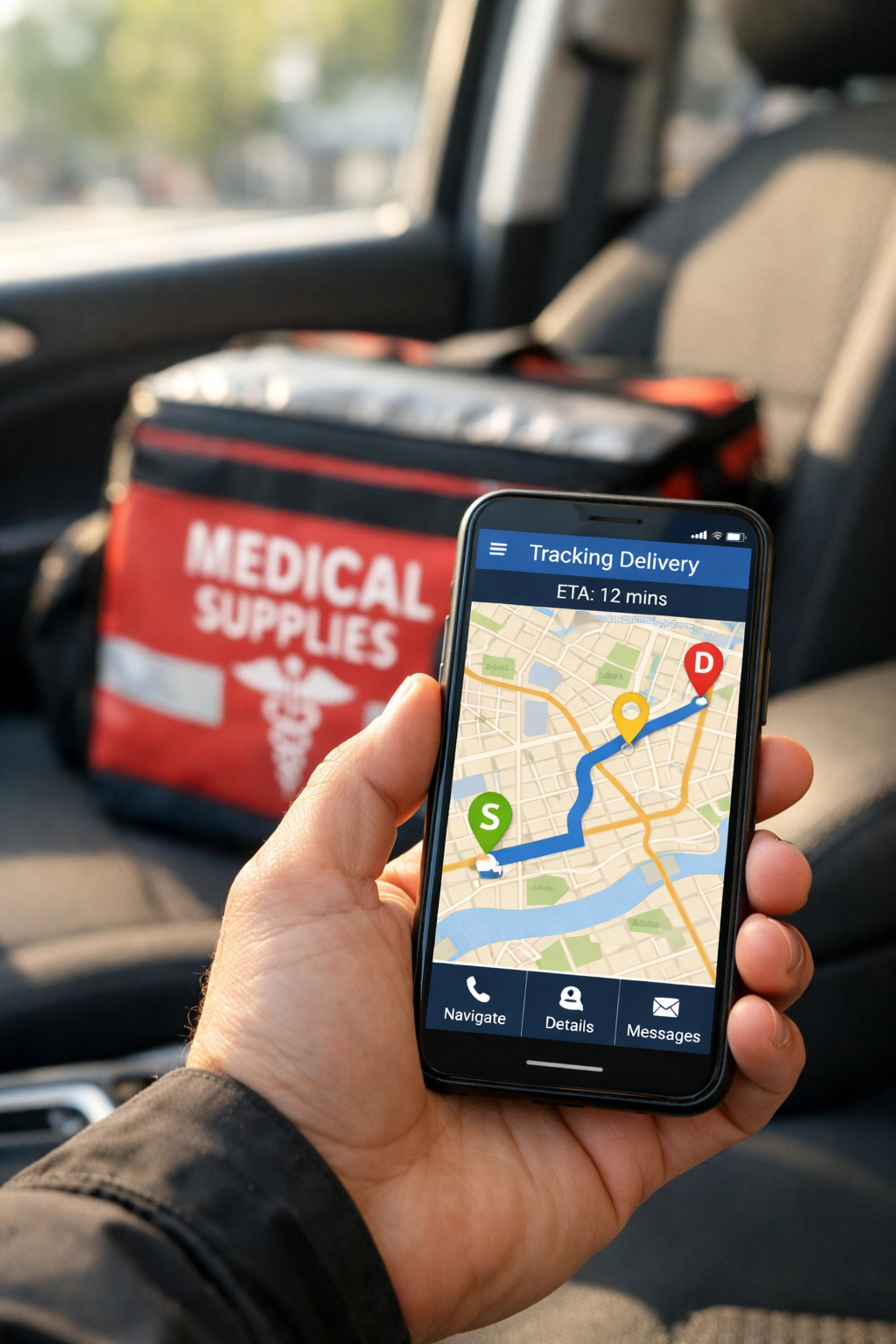
If you can track your Amazon package in real-time, why can't you track your patient's urgent lab work?
Without GPS tracking, you're essentially crossing your fingers and hoping everything arrives on time. And when a physician calls asking where their STAT specimen is? "I think it's on the way" isn't exactly a confidence-inspiring answer.
The Fix: Only work with courier companies that offer real-time GPS tracking. You should be able to see exactly where your delivery is at any moment and get accurate ETAs. This isn't a luxury feature: it's standard practice for professional medical logistics in 2026.
Mistake #5: Ignoring Special Handling Requirements ❄️
Those "Keep Refrigerated" stickers aren't just suggestions. When medical supplies, specimens, or medications aren't handled properly, bad things happen:
- Test results become unreliable
- Medications lose potency
- Vaccines become useless
- You eat the cost of replacement (and that's not cheap)
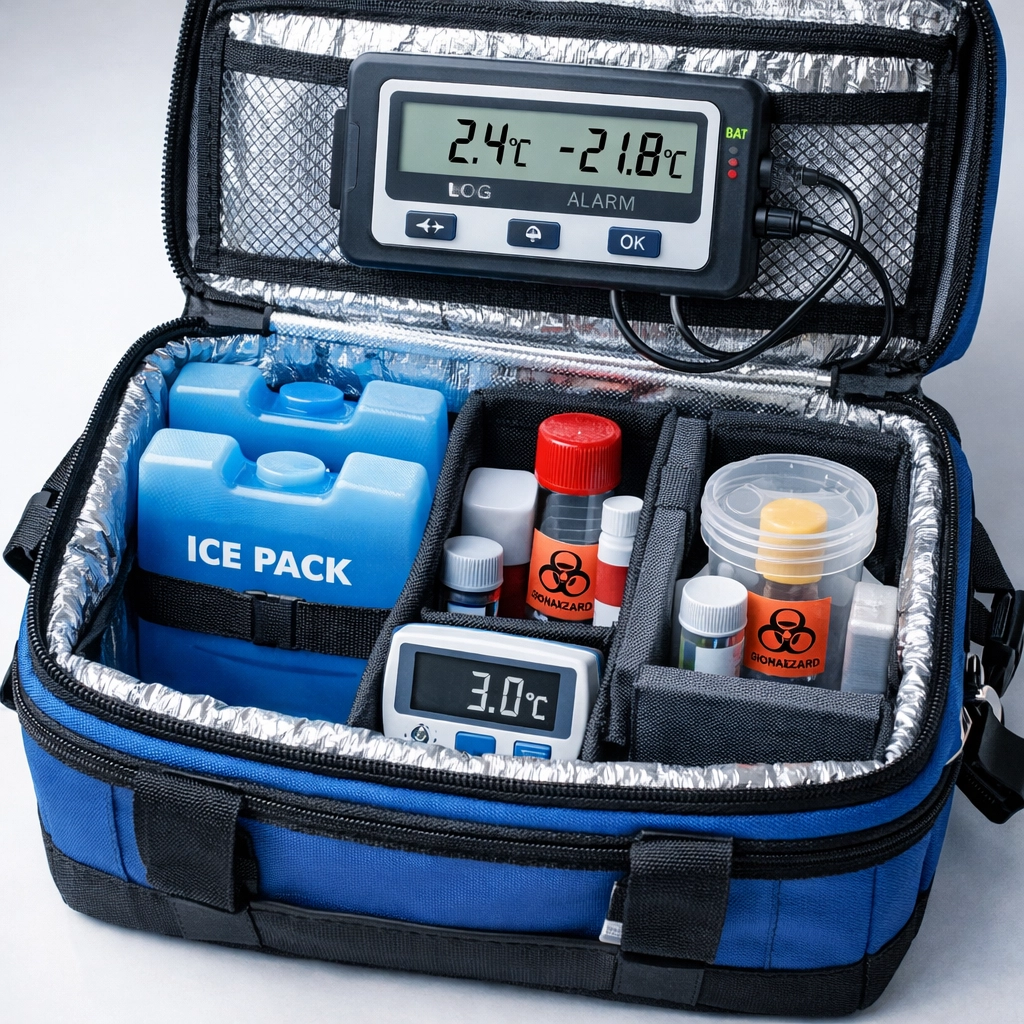
Temperature-sensitive items need temperature-controlled transport. Fragile items need cushioned packaging. Biohazardous materials need proper containers and labeling. It's not rocket science, but it requires attention to detail.
The Fix: Communicate ALL special requirements upfront: preferably in writing. Need it kept at 2-8°C? Say so. Requires a signature from a licensed pharmacist? Make that clear. And choose a pharmacy delivery service with proper equipment: insulated bags, temperature monitoring devices, and drivers who actually understand why these precautions matter. Our pharmacy delivery service has you covered on all fronts.
Mistake #6: Skipping the Paperwork 📋
We know, we know: nobody likes paperwork. But when it comes to medical courier services, documentation isn't optional.
Without proper records, you can't:
- Prove chain of custody if questions arise
- Track patterns of delays or issues
- Demonstrate HIPAA compliance during audits
- Resolve disputes about what was shipped when
Plus, if something goes wrong and you don't have documentation? Good luck explaining that to your compliance officer.
The Fix: Maintain detailed records for every single shipment. That includes what you're sending, where it's going, who picked it up, when it was delivered, and who received it. Your medical courier service should provide electronic proof of delivery with signatures, timestamps, and photos. If they're still using paper receipts that get "lost," it's time to upgrade.
Mistake #7: Giving Vague Delivery Instructions 💬
"Just leave it at the front desk" might work for office supplies. For medical deliveries? Not so much.
When instructions are unclear, you get:
- Packages left in unsecured areas
- Deliveries accepted by unauthorized personnel
- Temperature-sensitive items sitting in warm lobbies
- Potential HIPAA violations from improper handling
The Fix: Be ridiculously specific with your delivery instructions. Include:
- Exact drop-off location (loading dock, pharmacy window, lab receiving, etc.)
- Who is authorized to sign (titles, not just names)
- Any access codes or special entry procedures
- What to do if the primary contact isn't available
- Whether items need immediate refrigeration
And make sure your courier actually reads and follows these instructions. That's non-negotiable for a reliable lab courier service.
The Bottom Line: Your Patients Deserve Better 🏥
Here's the deal: medical courier services aren't just about moving stuff from Point A to Point B. They're about maintaining the integrity of the healthcare chain, protecting patient information, and ultimately ensuring people get the care they need when they need it.
Every one of these seven mistakes puts that mission at risk.
The good news? They're all completely avoidable. Choose a medical courier service that takes compliance seriously, invests in proper training and equipment, and treats every delivery like it matters: because it does.
At RCS Delivery, we've been handling medical logistics for years. We get it. And we're here to make sure your specimens arrive intact, your medications stay at the right temperature, and your documentation stays audit-ready.
Ready to fix these mistakes for good? Let's talk about how we can make your medical deliveries actually reliable. Because "good enough" isn't good enough when health is on the line.