
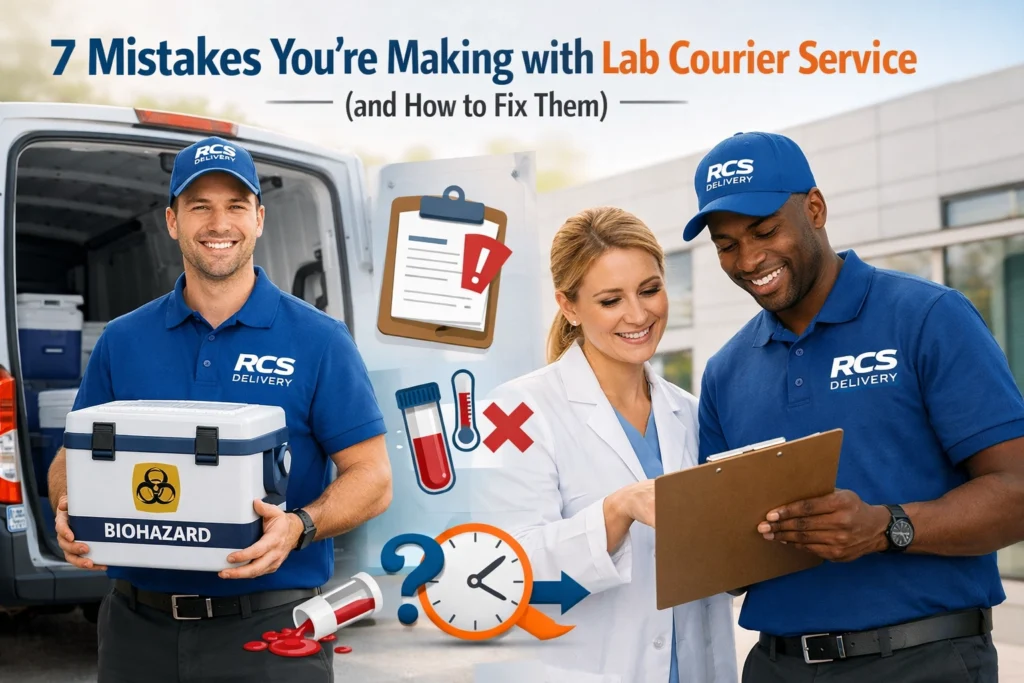
Let’s be real: running a laboratory is high-stakes work. Between analyzing samples, managing data, and ensuring patient results are accurate, you’ve got a lot on your plate. But here’s the deal: even the most advanced lab in the world is only as good as the courier service that gets the specimens there.
If your samples are sitting on a hot dashboard or getting lost in a maze of apartment complexes, your hard work goes down the drain. Worse, patient care suffers. At RCS Delivery, we see it all the time. Labs are often making small, avoidable mistakes that turn into massive headaches.
Ready to stop the chaos? Let’s dive into the seven most common mistakes you’re making with your medical courier service and, more importantly, how to fix them right now. Buckle up!
📋 What’s Inside This Guide
- Mistake 1: The Address Guessing Game 📍
- Mistake 2: Vague "Drop-Off" Riddles 🕵️
- Mistake 3: The "Ghost" Recipient 👻
- Mistake 4: Guessing the Size and Weight ⚖️
- Mistake 5: Ignoring Special Handling Needs 🌡️
- Mistake 6: Picking the "Budget" Generic Courier 🚛
- Mistake 7: Flying Blind Without Real-Time Tracking 🛰️
1. The Address Guessing Game 📍
We’ve all been there. You’re in a rush, you jot down "123 Main St," and hit send. But wait: is that Main Street, Main Avenue, or Main Circle? Is there an apartment number? A suite?
Why it’s a disaster: Missing or incorrect address info is the number one reason for delivery delays. A courier wandering around a business park trying to find "Suite B" when you meant "Building B" is time wasted. In the world of lab logistics, time equals specimen integrity.
The Fix:
Use a robust address verification system. Before you dispatch a same day delivery service, double-check the postal codes and suite numbers.
"Accuracy at the point of entry saves hours on the road," says Bilal Aziz, CEO of RCS Delivery. "If we don't know exactly where we're going, we can't be the reliable partner you need."

2. Vague "Drop-Off" Riddles 🕵️
"Leave it by the door."
"Give it to the person at the front."
These instructions are basically a game of "I Spy" for your courier. Which door? Which person? If your instructions are ambiguous, you’re asking for a failed delivery.
Why it’s a disaster: Vague instructions lead to specimens being left in unsecured areas or with unauthorized personnel. This isn't just a logistics fail; it can be a HIPAA nightmare.
The Fix:
Be surgical with your instructions. Instead of "leave at the back," try "deliver to the loading dock on the North side, ring the buzzer labeled 'Lab Intake,' and ask for Sarah." Using specific fields in your laboratory services order form ensures the driver knows exactly what to do without guessing.
3. The "Ghost" Recipient 👻
Ever had a driver stuck at a gated community at 2:00 AM with no way to get in? Or a driver trying to deliver to a hospital wing that requires a badge? If you don’t provide contact info for the person receiving the delivery, the driver is stuck.
Why it’s a disaster: If the courier can't reach someone to solve a minor hurdle (like a gate code), the delivery fails. The specimen then sits in the van, potentially compromising its viability.
The Fix:
Always provide both a primary and a secondary phone number. Better yet, include an email address. This ensures that if the driver hits a snag, they can get a solution in the blink of an eye. At RCS, our professional courier team is trained to communicate, but they need a number to call!
4. Guessing the Size and Weight ⚖️
"It’s just a small box."
Narrator: It was not a small box.
Incorrect package dimensions are a quiet killer of efficiency. If a driver shows up in a sedan expecting a small cooler but finds three heavy crates, you have a problem.
Why it’s a disaster: When dimensions are wrong, specimens might be loaded onto the wrong vehicle type, leading to space issues or overweight charges. It can even lead to offloading delays at hubs because the equipment wasn't ready for the weight.
The Fix:
Confirm the actual size and weight before you book your secure courier services. Use a scale if you have to! Accurate data allows us to dispatch the right vehicle from our route service fleet, ensuring a smooth ride from point A to point B.
5. Ignoring Special Handling Needs 🌡️
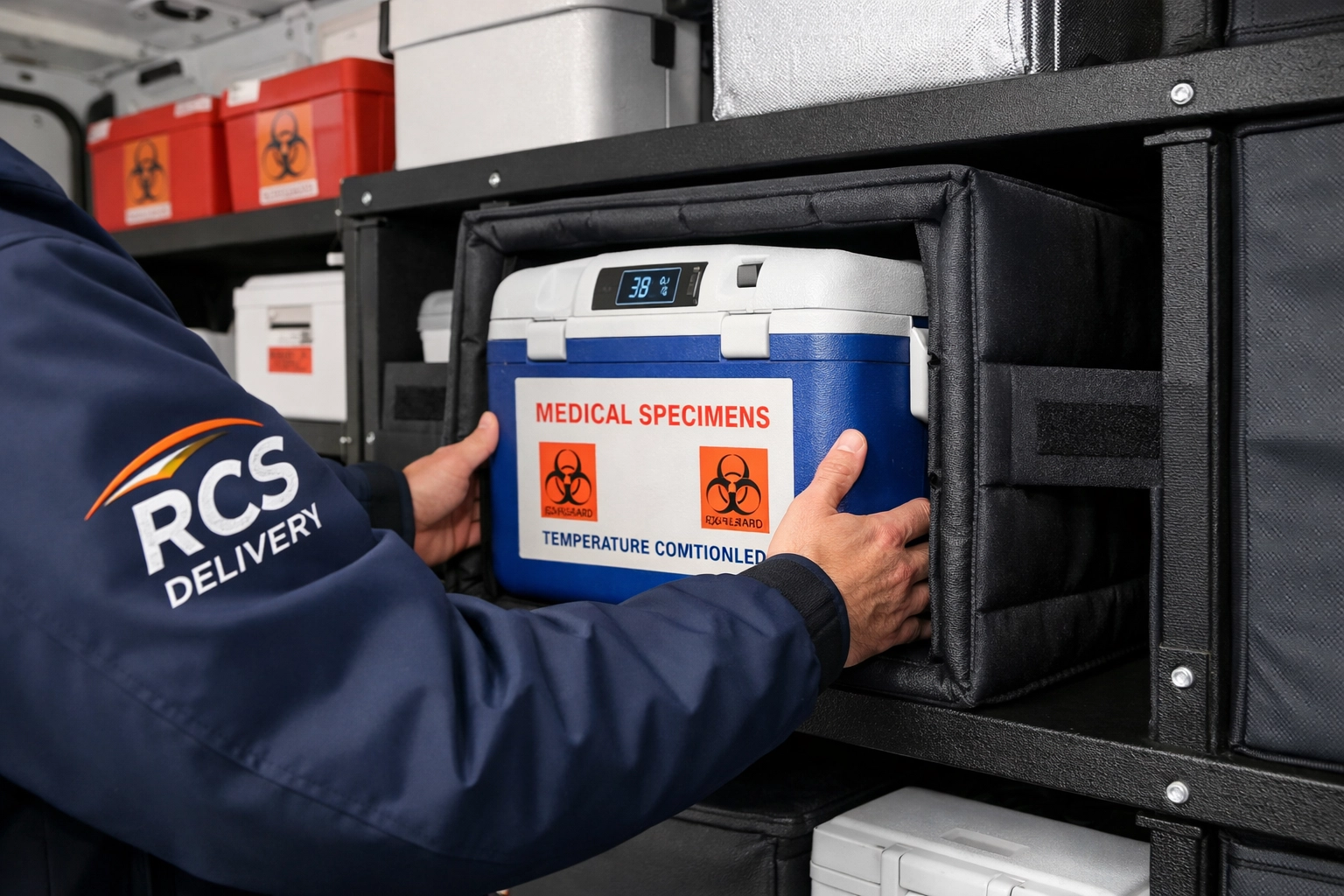
Lab specimens aren't like Amazon packages. They can't just be tossed in a bin. Many require refrigeration, upright positioning, or protection from light.
Why it’s a disaster: If you don't clearly document that a specimen needs to stay at 4°C, it might end up at room temperature. This leads to "specimen rejected" notes from the lab and a whole lot of frustrated doctors and patients.
The Fix:
Documentation is your best friend. Clearly label every package and ensure the digital order reflects the handling needs. Whether it's a bank courier service for sensitive documents or a medical run, special instructions must be front and center.
6. Picking the "Budget" Generic Courier 🚛
We get it: everyone wants to save a buck. But using a generic "gig economy" delivery app for medical specimens is like asking a pizza delivery driver to perform surgery. They might be nice, but they aren't trained for this.
Why it’s a disaster: A qualified medical courier service understands OSHA, HIPAA, and the "Chain of Custody." A generic driver doesn't. They won't have the spill kits, the temperature-controlled bins, or the knowledge of federal transportation regulations required for biohazards.
The Fix:
Partner with a specialist. You need a team that understands the weight of what they are carrying. Look for a company that offers overnight delivery and specialized medical transport. It might cost a few dollars more, but it saves thousands in potential liability and lost samples.
7. Flying Blind Without Real-Time Tracking 🛰️
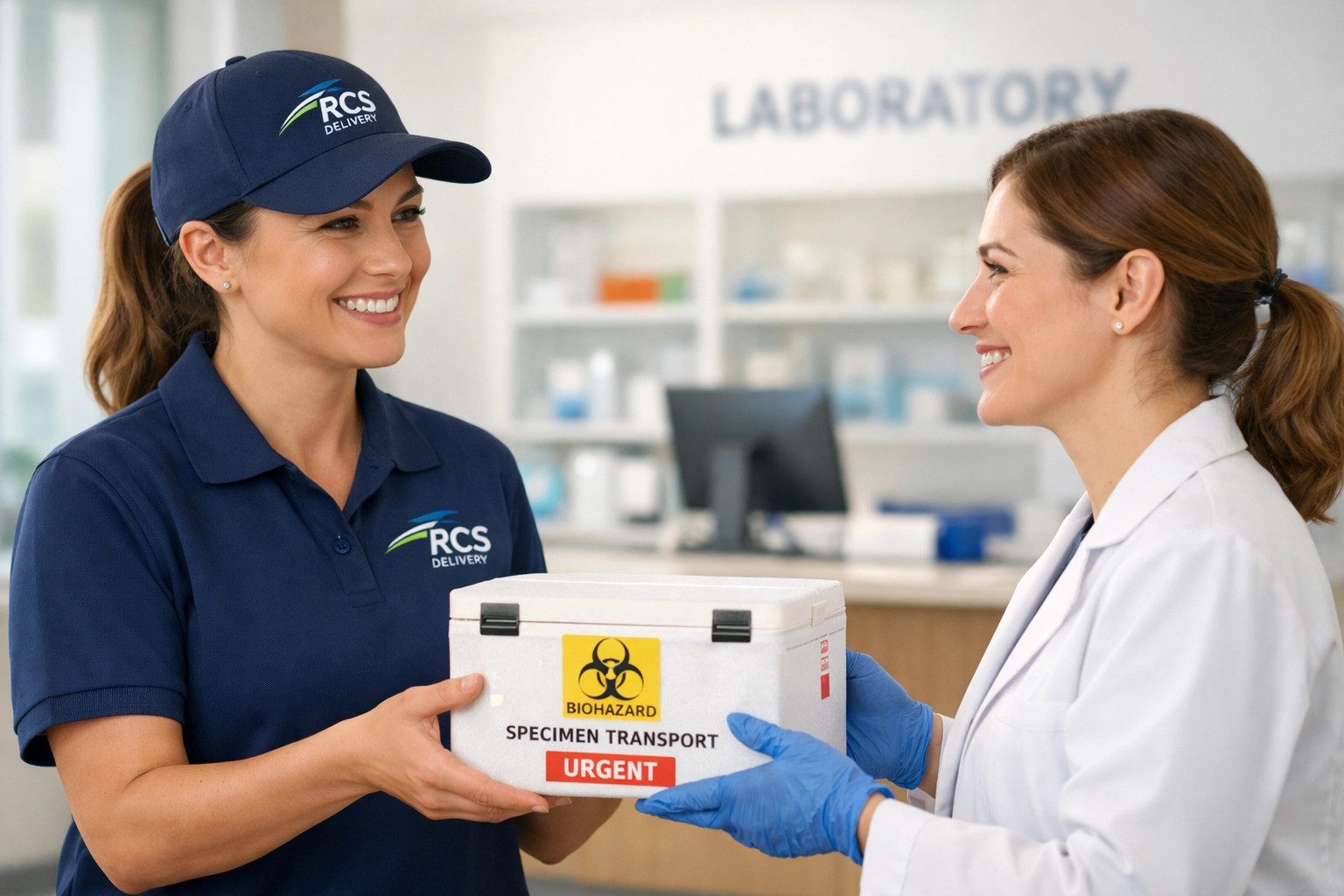
If you’re still calling a dispatcher and asking "Where's my driver?" in 2026, you're making a huge mistake.
Why it’s a disaster: Without order tracking, you have no idea if a specimen is delayed. You can't proactively tell the lab to stay open late or notify a doctor that results will be delayed. You're just sitting there, crossing your fingers.
The Fix:
Demand transparency. Choose a service that provides a real-time GPS map and instant status updates. At RCS Delivery, we believe you should never have to wonder where your critical cargo is. Our tech-forward approach gives you total visibility from pickup to drop-off.
🛠️ How to Get It Right Every Time
Fixing these mistakes doesn't have to be a chore. It’s all about creating a system that prioritizes clarity and expertise. Here’s a quick checklist to keep on your desk:
- Verify the Address: Check the suite and zip code twice.
- Be Specific: Give the "secret handshake" instructions for the drop-off.
- Provide Contacts: Give the driver a way to reach a human.
- Know Your Stats: Accurate weight and size are non-negotiable.
- Label Everything: If it's cold, say it's cold!
- Trust the Pros: Use a dedicated medical courier service.
- Watch the Map: Use real-time tracking to stay ahead of the game.
Ready to level up your logistics? 🚀
At RCS Delivery, we don’t just move boxes; we move healthcare forward. We’ve built our reputation on being the most reliable partner in the business. Whether you need same day delivery or a complex route service, we’ve got the trained staff and the tech to make it happen.
Don't let a simple mistake compromise your lab's reputation. Let's get your specimens moving the right way.
Ready to get started? Contact us today and let's talk about how we can streamline your lab's delivery needs!
So, what’s the biggest delivery headache you’re facing right now? Let us know: we’ve probably seen it and fixed it already. Let’s get shipping!
For more tips on secure transport and logistics, check out our blog or read more about us.